Learn
SI Units vs. English Standard Units
The quantities we reviewed in previous parts of this lesson are not the only quantities that you can measure using the metric system. However, they are the most common measurements used in basic science.
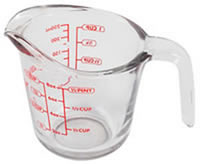
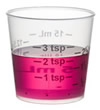
You may not be familiar with the SI units we reviewed because, in the United States, we use the English Standard system of measurement in our daily lives. This includes measurements like "cup" and "tablespoon."
English Standard
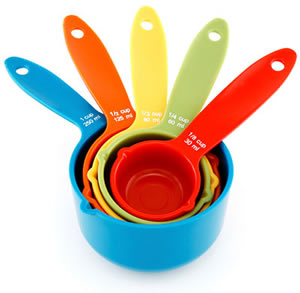
The English Standard measuring system was developed from people measuring objects with parts of their bodies and with common household items. For example, cups, baskets, and pails were used to measure volume.
Because these measuring objects were different sizes, a standard was set so that all measurements represented the same amount for everyone.
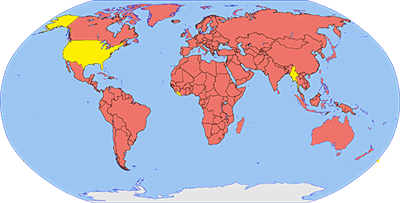
Over the last 200 years, nearly every other nation of the world has officially adopted the SI system. Currently, only three countries use the English Standard system of measurement: the United States, Liberia, and Myanmar (formerly known as Burma).
On this map, countries shown in yellow use the English Standard. Countries in coral use SI units, or the metric system.
Units
English Standard Units include:
Length:
- 12 inches (in) = 1 foot (ft)
- 3 feet = 1 yard (yd)
- 5,280 feet = 1 mile (mi)

Weight:
- 16 ounces (oz) = 1 pound (1 lb)
- 2,000 pounds = 1 ton
Volume:
- 3 teaspoons (tsp) = 1 tablespoon (tbsp)
- 16 tablespoons = 1 cup (c)
- 8 ounces (oz) = 1 cup
- 2 cups = 1 pint (pt)
- 2 pints = 1 quart (qt)
- 4 quarts = 1 gallon (gal)
- 1 gallon = 16 cups