Learn
Meals
Nutrition Requirements
Here is a table that will make it easier for you to know what each person in your family needs to take in each day: Appendix 2. Estimated Calorie Needs per Day, by Age, Sex, and Physical Activity Level, Dietary Guidelines for Americans 2015-2020.
Keep this in mind when you get to the assignments that involve planning menus for people in various life stages.
What Makes a Meal?
A meal is never made of one or two food items! Pizza is not a meal. Hamburger and fries are not a meal. You may get full and not be hungry if you eat like this, but this type of eating does not provide the needed nutrition for health, growth, and energy.
A meal should provide a good variety of nutrients by supplying a good mix of food groups. Each food group offers its own selection of nutrients, fiber, and fats.
A meal should be made of at least 4 of the 6 major food groups. The food groups include:
- Meat
- Dairy
- Grains
- Fruits
- Vegetables
- Fats
You do not need to include every food group in every meal, but all food groups need to be included over the course of a day for the best nutrition. You need different amounts of different nutrients.
The Choose MyPlate plan developed by the United States Department of Agriculture(USDA) is a good picture to keep in mind when planning healthy, balanced, and nutritious meals for yourself or your family. This picture represents what food groups should be on your plate in the needed proportions:
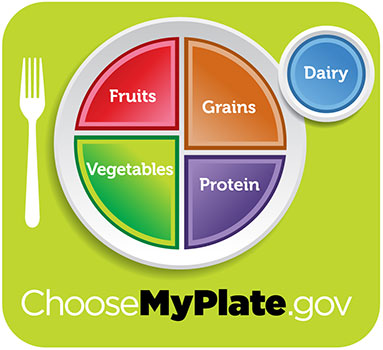
- Notice the biggest section of the MyPlate diagram is made of vegetables and fruits.
- The 2nd biggest group that you should include is grains. This include rice, corn, bread, pasta and more.
- Protein is the smallest group on your plate. Americans eat way more protein than they need, and it often is the most expensive part of the meal.
- Dairy products are needed and can be included as milk drinks or milk-based foods like yogurt or cheese.
- Dietary fats are often spread out over the other food groups and not served separately. Some butter on your potato, meat cooked in oil, or homemade salad dressings usually supply the dietary fat you need.
Tips
Spread the Nutrition Out: Meals need to be balanced with a good variety of food groups and food types to supply the proper balance of nutrients. You may not drink milk at every meal but try to get some calcium over the course of the day. You may not eat fruit with dinner, but you can get some at lunch or breakfast or even as a snack.
Serving Sizes: All the meal planning, plate planning, and nutrition calculating is based on serving sizes of food. You may not be aware that serving sizes are often nothing like what you actually eat! The serving size is a standard set by nutrition organizations so they can have consistent measurements of calories and nutrients provided by the food.
- If you think you are having trouble fitting in 3-4 servings of fruit each day, remember a serving size of an apple is ½ an apple! Who eats ½ of an apple? So, when (like most people!) you eat a whole apple, you've gotten two servings of fruit for the day!
- A serving of beef is the size of a deck of cards! No one eats a piece of steak that small.
- A king-sized Milky Way candy bar is actually 3-4 servings!
Check out the serving size if you are reading labels for calorie counts. Those snack-sized bags of chips are tricky too. It may say 150 calories, but the serving size says 2.5 servings in that bag! Of course, you will eat the whole bag and now you've eaten 375 calories. It makes a difference!
Check out this article Serving Size vs. Portion Size: Is There a Difference from Eat Right to get a better idea about serving sizes.
Five Elements to Meal Appeal
When planning meals for yourself or your family, there are 5 elements to keep in mind to make the meals appealing. All the nutrition planning has gone to waste if the meal is half eaten or uneaten. By considering the following, a meal can be interesting or exciting to look at and consume:
- Color: A meal of cauliflower, mashed potatoes, cod, and bread would not look very appealing. It's all white! By adding color, you not only increase the eye-appeal, but you have also increased the nutrition since different colored foods include different vitamins and minerals.
- Red/purple/blue foods- Strawberries, red bell peppers, blueberries, tomatoes, eggplant, watermelon all provide anti-oxidants that decrease the risk of stroke and cancer.
- Orange/yellow foods- These foods provide Vitamin A to maintain vision health, fight cancer, and increases skin health. Examples include oranges, sweet potatoes, summer squash, corn, cantaloupe, peaches, and butternut squash.
- Green foods- Dark leafy greens are high in Vitamin A but also provide calcium. Most green vegetables are also high in fiber. Examples include spinach, broccoli, Brussels sprouts, green beans, green grapes, zucchini and green apples.
- White foods- An all-white diet is dull but white foods contribute important nutrients. Instead of just potatoes try to include cauliflower, onions, turnips, bananas, parsnips, and fennel. Look for something new and find a good recipe.
- Texture: A variety of textures appeal to the eyes and the tongue. Try to include different textures in each meal. It is more interesting to have something smooth like mashed potatoes, something chewy like meat, something crunchy like a salad, something soft like a cooked vegetable.
- Size and Shape: A variety of sizes of food bites and shapes will make the meal more visually interesting. A mound of smooth mashed potatoes alongside a pile of peas with a piece of steak gives a pleasing mix of sizes and shapes and encourages the eater to dig in! Toddlers like the appeal of diced cooked carrots, chopped meats, and something smooth like yogurt they can eat with a spoon.
- Flavor: Prepare a combination of flavors. Each tongue has over 9,000 taste buds and they all like to work! Include a good mix of sweet, salty, bitter, and sour to give the meal a sensory appeal. The smell is also important and is a big part of the flavor.
- Temperature: Meals are more appealing if you try to include some different temperatures of foods. A cold salad with a good, warm casserole makes for a more palatablepleasing, satisfactory meal.
Six Principles of Menu Planning
There are 6 things to keep in mind when planning a healthy diet:
- Adequacy: Is there enough of each food group or types of food included? Including all food groups and types of food will ensure that all essentialnecessary nutrients are provided.
- Balance: Make sure there is not too much or too little of any one type of food. Include all food groups to get the correct blend of nutrients to maintain health and weight.
- Calorie Control: Menu planners must consider the required number of calories for each person in their current stage of life. Calories are needed for energy, cell function, growth, and development of brains and bodies. Too few calories limit all of these. Too many calories results in weight gain. It is a delicate balance of calories in and energy out.
- Moderation: This does not only apply to calorie intake but also to nutrients. Too much salt, sugar, or fat has detrimentalharmful or damaging effects of the body size, health, and efficiency. Your body does need fat, but it should be the right kind and the right amount. Salt is necessary but too much contributes to high blood pressure. Your body does not need added sugar, but it makes foods taste better. Limit added sugar and include enough fruits and vegetables to provide sugar naturally. Moderation can also apply to serving sizes. Eating too much of any good food will pack on weight and throw the balance of nutrients out of whack.
- Variety: Including a variety of foods will provide a good mix of nutrients. Eating the same foods over and over limits the types of nutrients that are available for the body to use and makes eating boring.
- Nutrient Density: Include foods that are high in nutrients but low in calories. Nutrient dense foods contain a lot of vitamins, minerals, complex carbohydrates, lean proteins, and healthy fats without a providing too many calories.
- Some examples of nutrient dense foods are spinach, kale, whole grains, blueberries, strawberries, salmon, sardines, low-fat dairy products.
- Low nutrient-density foods include fast food, chips, fries, candy, sodas, fruit juices, and prepackaged or processed foods like lunch-meat.
Types of Menu Plans
Families and professional dietitians both need to plan meals that fill the nutrition needs of their clients and family members. They can both benefit from using industry accepted menu plans to design a healthy intake of recommended nutrients over time to promote good health and ward off chronic disease. These are some of the menu plans used by dietitians that can be adapted to personal use:
Cyclic
The main feature of a cyclic menu is that it is made up of a fixed number of meals that are repeated over a cycle.
Get some menus from the lunchroom at school. You can probably find them on the school district web-page. You might see that they use the same menu over and over every month or every 6 weeks. Summer camps, hospitals, and some corporate dining rooms use this type of menu. College dining rooms often use the same menu every week. Everyone at college knows when it is Taco Tuesday or Meatloaf Monday!
A cyclic menu is also good for families. It takes time and effort to make meal plans for everyone that supplies their calorie and nutrition needs. The benefit of a cyclic menu is that you can sit down once, make one for six weeks, and repeat it for years with minor adjustments.
The drawback to this type of menu is that is takes a lot of time to plan. It also does not take into consideration the availability of the changing tastes of the family or group, seasonal products or grocery sales. You may need to make periodic adjustments to accommodate grocery sales, changing tastes of the family, and seasonal availability.
Non-Selective
On a non-selective menu, the main feature is that the person eating does not get a choice of what they will eat. For example, they may have a choice of scrambled eggs or fried eggs, but they will get eggs.
This is most often used in hospitals and nursing homes, especially when patients have specific nutrition needs. An example would be someone being treated for a stomach ulcer who needs a bland diet
nothing spicy or acidic.
If you think about it, this may be the type of menu used in your house. Whatever is cooked that day is what you eat! This type of plan benefits the cook because they can prepare whatever they have without regard to people's desires or whims.
The main drawback to this plan is that not everyone likes the same food or has the same nutrition needs.
Selective
The key feature of a selective menu is that it includes 2 or more choices in each category of food included in the meal. You may have choices of appetizers, entreesthe main course vegetables, salads, desserts, and beverages. The eater gets to select what he/she wants to eat. You will find this type of menu used in restaurants and cafeterias.
The benefit of this menu plan is the kitchen staff can plan what to buy and prepare. They can plan around seasonal availability and sale prices.
The drawback to this menu is that it limits food and serving size choices.
Single Use
The main feature of this single use menu that it is a one-time menu planned for a specific event, such as a wedding, corporate banquet, or just company coming over. Families often use this type of menu to celebrate holidays or special events like birthdays or anniversaries.
The benefit of a single use plan is that you do not have to keep nutrition needs in mind because it is a special occasion.
The drawback to this type of menu plan is usually expensive since it is for special events.
How to Analyze a Menu Plan
There are many products available to professional dietitians and food service organizations. But how does a regular person analyze their menu or diet for nutritional completeness? It is hard work to plan menus for families that are not home for regular meal times, have different nutrient needs, like different foods, and stay within your food budget!
You already know what nutrients you need. You probably know where you will be each day and what will be available to eat. You most likely know how money you will have to spend. You can make healthy choices even at fast food restaurants. Keep all this in mind when planning your menu for the week. Busy families know which restaurant has Kids Eat Free on which nights.
The Nutrition Calculator at Nutrition Value is a great tool to help you decide if what you are planning is nutritionally sound.
Almost all chain restaurants (including fast food) have nutrition facts available at the counter or online. Check them out before you order.
You will still have to keep in mind the components of a meal and the 6 Principles of Menu Planning but with all the knowledge you are learning in this course, you should be able to plan for healthy eating and good physical fitness that will enhance your life!