Introduction
In forensic cases on television, DNA is mentioned as viable evidence. But is DNA as common and useful to crime investigation as portrayed?
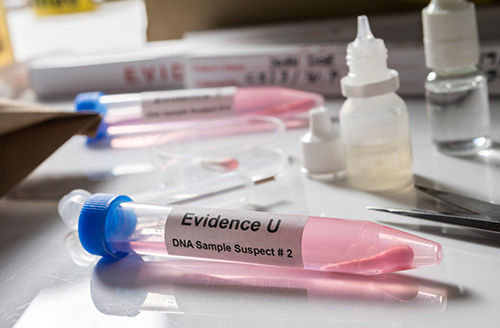
In this lesson, you will learn how DNA is collected at a crime scene and analyzed for comparison as well as some of the limitations of this type of evidence.
Following successful completion of this lesson, students will be able to...
- Explain how to collect DNA evidence and why certain precautions must be taken.
- Analyze DNA evidence to determine if a given sample is a match with a suspect.
Essential Questions
- How have improvements in forensics science led to changes in the criminal justice system?
- How have scientific advancements contributed to the evolution of forensic science?
- What portions of the DNA are compared when establishing a match between a subject and samples collected the scene?
- What precautions need to be taken to ensure that DNA does not denature or become contaminated?
Enduring Understandings
- DNA can be retrieved from a variety of human cells and utilized to directly link an individual to a crime scene with reasonable certainty.
- Forensic results are open to the interpretation and limitation of the pathologist's knowledge and methods.
The above objectives correspond with the Alabama Course of Study: Forensic Science and Crime Scene Investigation standards: 19, 20.