Chemoreceptors and Breathing
As we just learned, the respiratory cycle depends on changes in pressures inside the chest cavity compared to the atmospheric pressure outside the body. But, the rate and rhythm of respiration are under control by neural and chemical factors. Normal breathing is rhythmic and involuntary and at a resting adult rate of 12-24 breaths per minute.
The neural control of breathing rate and rhythm occurs in the respiratory center of the brainstem. (See Image 3 for an illustration of the brainstem).
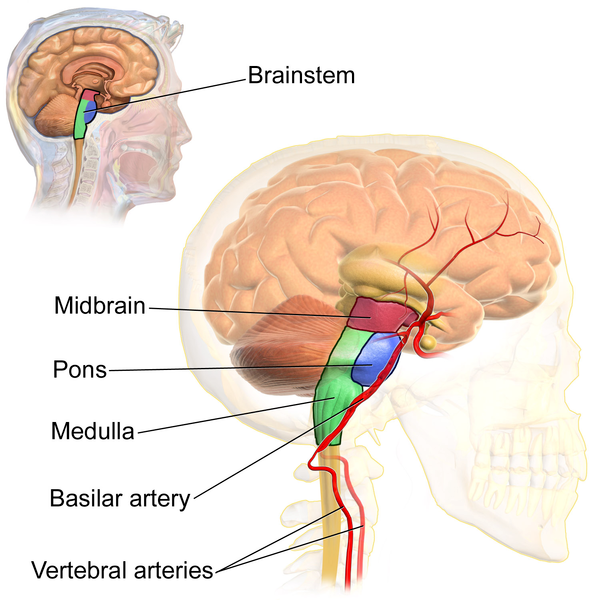
Image 3
Chemical Factors
Chemical factors controlling breathing are the detection of CO2, pH, and O2 levels in the blood and cerebrospinal fluid by chemoreceptors found in different places of the body. Chemoreceptors are cells that responds to a chemical signal and sends a biological response.
Chemoreceptors and Homeostasis
See Table 1 for information about these chemoreceptors, what they detect, and how the body responds to maintain homeostasis:
| Chemoreceptor | Chemical Level Detected | Biological Signal (due to abnormal chemical levels) | Purpose of Signal |
|---|---|---|---|
| Brain chemoreceptors | Decreased pH levels Increased CO2 levels within cerebrospinal fluid |
Increase breathing rate and depth | Remove CO2 through exhalation which also removes acid to help improve pH |
| Aortic and carotid artery chemoreceptors | Oxygen, pH, and CO2 Levels are detected | Dependent on chemical and level | low oxygen, high CO2, and lower pH levels will ALL cause the same response: increased respiratory rate |
 Check Your Understanding:
-A chemoreceptor functions to detect changes in set points of chemicals in our body like carbon dioxide, pH, and _____ levels.
-If the chemoreceptor in your aorta sensed a low oxygen level, what would happen?
-Would a resting adult respiratory rate of 30 breaths per minute be within the normal range?
-What part of the brain is where the respiratory center is located?