Introduction
- Learn
- Try It
- Task
- Unit Vocab
- Course Vocab
Introduction
Have you ever traveled to a high-altitude area and noticed it felt like you couldn't get enough air when you were walking or hiking? What caused this? How did your body respond? Did you breathe faster or feel tired?
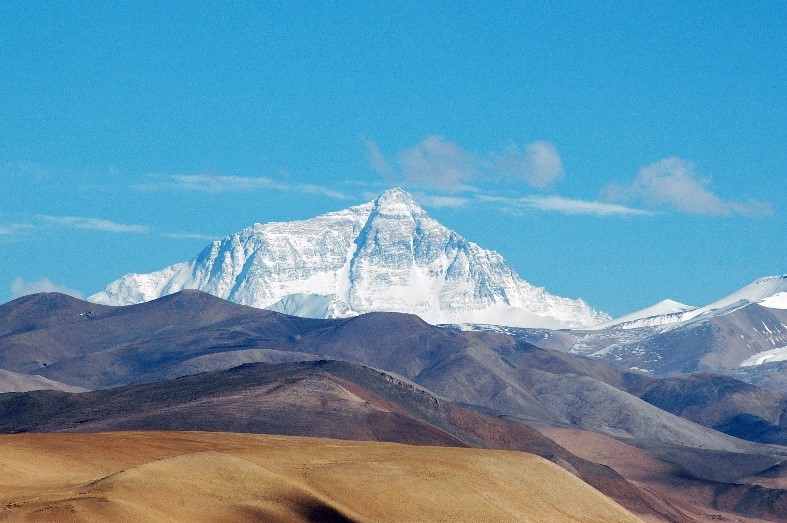
When you breathe in air at sea level or close to sea level as in Alabama, the air contains about 21% oxygen and an atmospheric pressure of about 100 kPa.
When you breathe in air at a high-altitude area, one that it 6,000 feet above sea level or more, the air contains about 20% oxygen and has a lower atmospheric pressure. An altitude as high as Mount Everest (29,000 feet above sea level) has an atmospheric pressure as low as 33.7 kPa. The lower atmospheric pressure makes it harder for oxygen to diffuse into the blood as you breathe it into your lungs. This causes oxygen levels to decrease, and your body compensates by increasing breathing rate.
Now, in this lesson, let's learn about the chemoreceptors that detect this oxygen level change in your body and the part of the brain that signals for you to breathe faster.
| Lesson Objectives |
|
Following successful completion of this lesson, students will be able to...
Enduring Understandings
The above objectives correspond with the Alabama Course of Study: Anatomy and Physiology standards: 9 |